
The nearest village worth a trip from the lake. What to do there if you're not fishing, and what to bring back if you are.
Sancerre is twenty minutes north of Lac de Lumière, sat on top of a hill in the middle of vineyards. Two reasons to go: someone in your group isn't fishing and wants something to do, or you fancy a couple of hours off the bank with the car. This guide covers both.
What's there
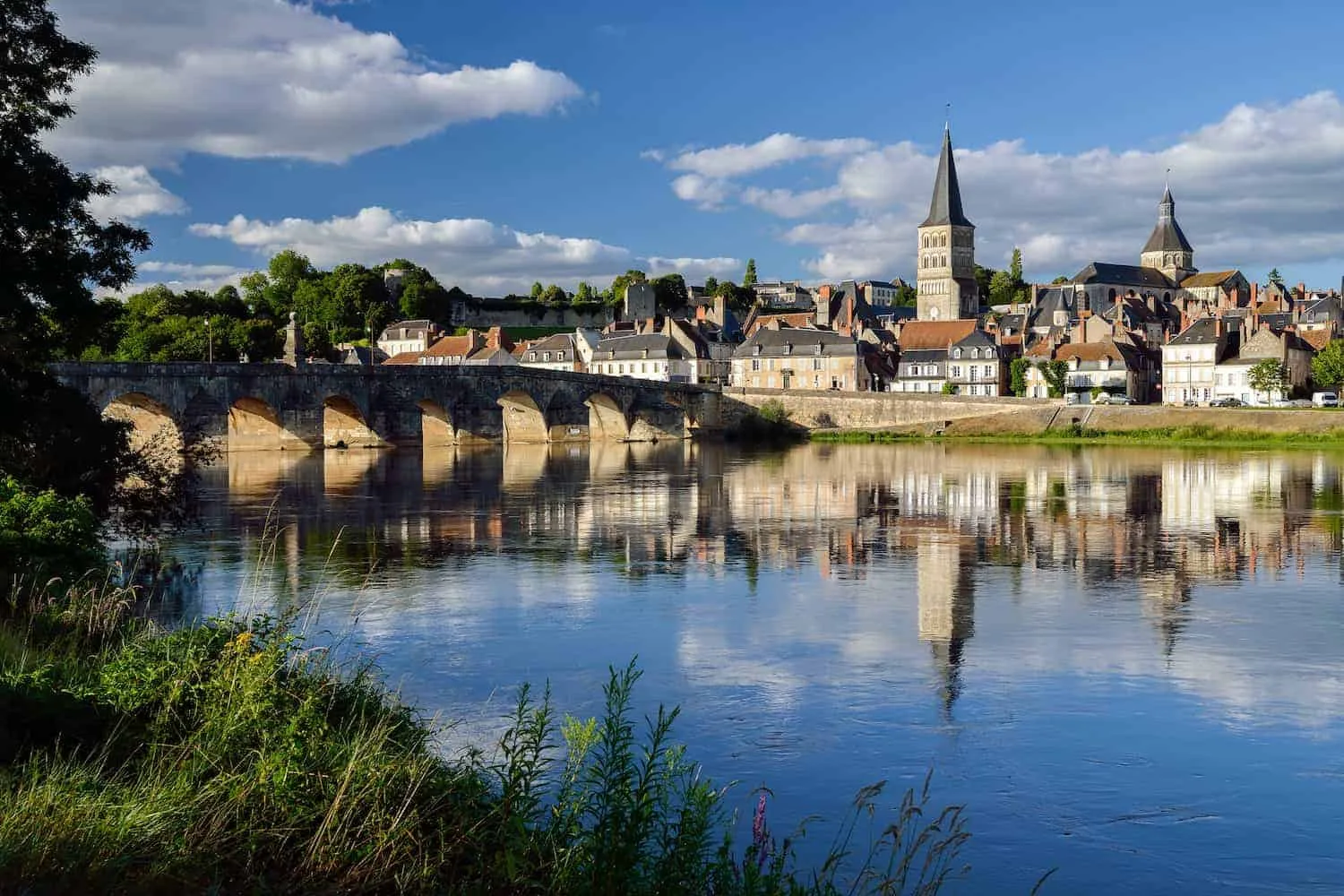
A small medieval village — about 1,500 people — perched on a steep hill in the Cher département of central France. It looks down over miles of vines on every side, with the Loire river running below it.
Two things make it famous.
The wine. Sancerre is one of the great names in Sauvignon Blanc — crisp, dry, the sort of bottle that turns up on UK restaurant lists at multiples of the price you'll pay at the cellar door. The vineyards have held AOC status since 1936 and cover around 2,700 hectares. There's a smaller amount of red and rosé from Pinot Noir if you want to try something different. Across the river is Pouilly-Fumé — same grape, slightly different soil, a flintier, smokier finish. Worth picking up a bottle of each if you're buying.
The view. You're high above the valley on a rocky promontory, with vineyards in every direction. The climb up the village earns its keep before you've bought a glass of anything.
If you're picking up wine and cheese
The shortest version of a Sancerre trip is an hour, door to door. Park, buy, leave.
Park at Nouvelle Place, just outside the old village. Walk into any of the cellars — there are dozens in the centre — and ask for a tasting. Most are free or a few euros. Big names you'll see on UK supermarket shelves include Henri Bourgeois and Vacheron, both with cellars in or near the village. The bigger producers run scheduled tours; smaller ones are more personal but you may need to ring ahead. They'll wrap bottles for travel, and most ship internationally if you don't fancy carrying them.
For cheese, drive five minutes down the hill to Chavignol. It's a tiny village that produces Crottin de Chavignol — a small, round goat cheese with its own AOC, the traditional pairing for the wine. Fromagerie Dubois-Boulay is regularly recommended for buying direct from the producers. Cheese shops in Sancerre itself stock it too if you don't want the detour.
A young Crottin with a glass of Sancerre Blanc is one of those things you can read about for years without quite believing, and then you eat it once and you get it.
If your partner wants a half day
A walkable loop in the old village fills four or five hours easily.
Start at the Tour des Fiefs. It's the surviving keep from the medieval castle that used to dominate this region — there were originally six towers, only this one is left. Climb it for a small fee at the entrance. From the top you get a 360-degree view over the valley and the vineyards. Get your bearings here before going anywhere else.
Then walk the old town. The streets are 15th-century, narrow, lined with pale shutters and stone houses. They all eventually feed back to the main square. Look up while you walk — the Hôtel de la Thaumassière has carved stone figures and decorative window details along the roofline that are easy to miss otherwise.
Stop at Esplanade Porte César in front of the tourist office. Best view in the village, and the brochures inside cover everything else if you want more.
Lunch is on the main square. There are several cafés and restaurants with outdoor tables in summer. They're busy and a bit pricier than you'd pay elsewhere, but you're paying for the view and the position. Ask at the tourist office for current recommendations — restaurants change hands and ratings move, and a recent local steer is more useful than a list from a website.
If you've got a full day
Add the wine museum, Chavignol, and St Satur.
La Maison des Sancerre is a wine museum in the old town that explains how the wine is made, where it comes from, and why it tastes the way it does. There's a 4D film, a garden where you learn to spot the aromas in the wine, and tastings at the end. Useful starting point if you don't know much about wine, particularly with non-drinkers or kids in tow.
Chavignol is the cheese village three kilometres out — see above. Fifteen minutes there, browse the producers, fifteen minutes back.
St Satur sits at the bottom of the hill. There's a striking railway viaduct, the Loire river, and you can rent a canoe in summer. The Loire à Vélo cycle route runs through here too — if anyone in your group is on a bike, this is the way in.
That's a full day with lunch. Drive back to the lake in time for an evening session.
When to go
May to September is the obvious window — warm weather, vines in full leaf, all the cellars open.
September and October are arguably the best of all. The vendange (harvest) is on, the vines turn yellow and gold, and the village smells of fermenting grapes.
Winter is much quieter. A lot of cellars and some restaurants reduce hours or close. Still pretty, but you'll find half the doors shut.
In peak season, get there by mid-morning. By lunchtime in July and August it's busy.
Practical bits
- Drive. No useful public transport from the lake.
- Parking: Nouvelle Place, just outside the old village.
- Cards or cash: Most places take card. Smaller producers and the cheese shops in Chavignol sometimes prefer cash for small purchases.
- English: Widely spoken in the wine cellars and most restaurants. Less so in Chavignol — bring a few words of French and a smile.
- Tourist office: Esplanade Porte César. Brochures, walking trails, current opening hours, restaurant recommendations.
Lac de Lumière is a private 5-acre carp lake in the Loire Valley. Take a look at the lake → or book a stay →